
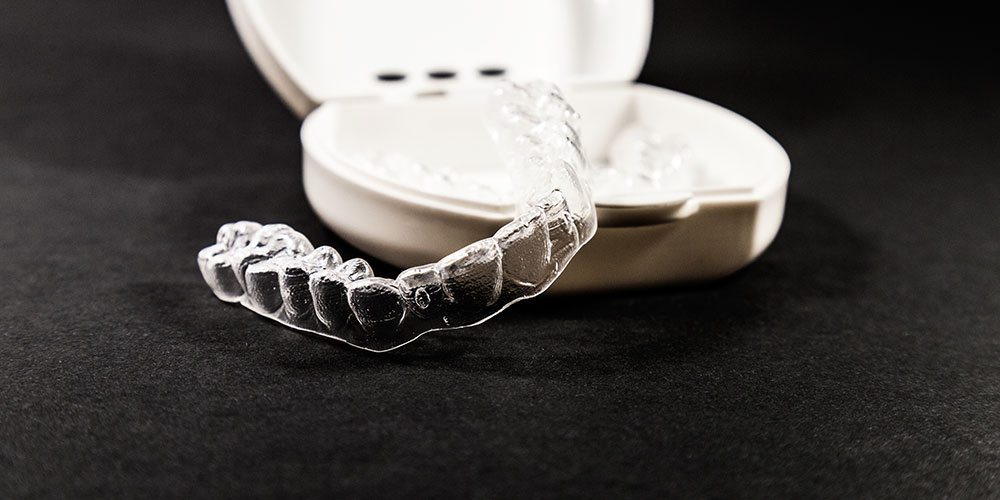
How Long Does Invisalign Take to Close a Gap?
The Short Answer, and Why It Depends
If you’re self-conscious about a gap between your teeth, you’re probably less interested in the general theory of orthodontics and more interested in one question: how long will Invisalign actually take?
A small gap may close in a relatively short Invisalign treatment period, while multiple or wider spaces can take considerably longer. Your orthodontist can estimate the timeline after evaluating your teeth, bite, and the cause of the spacing.
But no timeline is accurate until an orthodontist has actually scanned your teeth, because gap treatment depends on more than most people expect. Learn more with the Centre for Invisible Orthodontics, led by Dr. Stephen Grussmark, and call (305) 842-3672 for a complimentary consultation.
About Dr. Grussmark and the Centre for Invisible Orthodontics
Dr. Stephen Grussmark has practiced orthodontics in Miami for over 30 years and has worked with Invisalign since the system launched in 1999 — meaning he’s treated gap cases across nearly every generation of the technology, from the earliest aligner materials to today’s SmartForce attachments. He is currently the only Sapphire (and Diamond Pro) Invisalign provider in South Florida.
Because stable spacing correction can involve both tooth positioning and long-term retention, treatment planning matters beyond simply closing the visible gap.
What Actually Determines How Fast a Gap Closes
Gap Width
A hairline gap moves faster than a wide diastema. Wider spacing simply requires more tooth movement, which takes more aligners and more time.
 Number of Gaps
 Number of Gaps
One gap between the front teeth is a very different case than spacing distributed across several teeth — the aligners have to coordinate more movement at once.
Root Position, Not Just the Visible Tooth
Teeth are anchored by roots that also need to shift into the right position for the closure to be stable. This is part of why an orthodontist’s treatment plan (not just a general dentist’s) tends to produce more predictable timelines — root movement is a core part of orthodontic training.
Bite and Jaw Factors
If spacing is associated with a bite issue, tooth-position problem, missing tooth, or another underlying factor, the treatment plan may involve more than simply closing the visible space.
Compliance
Invisalign only works if the aligners are worn 20 to 22 hours a day. Inconsistent wear can slow progress and may extend the treatment timeline.
Why Some Gaps Close Faster With an Experienced Provider
Dr. Grussmark’s Invisalign experience is relevant when evaluating a provider for spacing correction. The Centre identifies him as a Sapphire and Diamond Pro Invisalign provider, and the practice states that Sapphire status reflects completing 200 successful Invisalign cases every six months. When comparing providers, ask about their experience treating spacing and other cases similar to yours.
Using treatment-planning features such as SmartForce attachments when appropriate can help achieve specific tooth movements.
What Happens After the Gap Closes
Closing a gap is only half of the process — keeping it closed is the other half. Teeth that have moved want to drift back toward their original position (a pattern known as orthodontic relapse), so a retention plan matters as much as the active treatment itself.
Ask your provider what type of retainer they recommend, when you’ll need to wear it, and what happens if your teeth begin shifting again.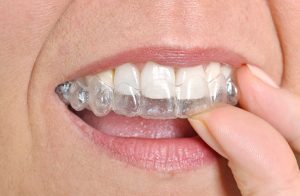
Questions Worth Asking About Your Own Gap
- “Based on my scan, is this a simple spacing case or is there a bite factor involved?”
- “How many aligners do you expect this to take?”
- “Will I need attachments (small tooth-colored bumps) to help close this gap efficiently?”
- “What does my retainer plan look like once the gap is closed?”
Can Invisalign Close a Gap Between Front Teeth?
Yes, Invisalign can be used to treat many types of spacing between teeth. The appropriate treatment depends on the size and location of the gap, the position of the surrounding teeth, your bite, and what is contributing to the spacing. Some cases involve a simple space between two teeth, while others require coordinated movement across several teeth.
Our South Florida Orthodontic Offices
The Centre for Invisible Orthodontics has three offices across Miami-Dade, so your ongoing gap-closure visits can be scheduled at whichever is most convenient:
- Coral Gables / Merrick Park — 4425 Ponce De Leon Blvd, Coral Gables, FL 33146
- Brickell — 848 Brickell Ave., Suite 1020, Miami, FL 33131
- Dadeland — 8950 SW 74th CT. Suite 1214, Miami, FL 33156
The practice also regularly treats patients traveling in from Miami Beach and Key Biscayne. All three locations use digital iTero scanning to map your gap and build your treatment plan, rather than physical impressions.
Get a Timeline Specific to Your Smile

The best way to estimate how long it will take to close your gap is through an orthodontic evaluation and treatment plan.
Call our Miami orthodontic office (305) 842-3672 to schedule a complimentary virtual consultation, or fill out the online contact form to get started. The practice serves patients throughout Coral Gables, Brickell, Dadeland, Miami Beach, and Key Biscayne.