
Being a teenager can present challenges when peer pressure is at the forefront. For most children ages 13-19, appearances and self-confidence are everything. As a teenager’s smile makes the first impression to others about connecting and relating, any crooked or missing teeth may present problems. From an early age, correcting problematic teeth are essential to…
If you need to indulge in foods and beverages that your intuition is telling you not to, you might want to read further to get a better grip as to what you consume and how it impacts your smile. Specific foods and beverages can stain your teeth, cause possible cracks in your teeth, or get…
“Bad bites” are considered to originate with crooked teeth. The overlapping, twisting, or misalignment of teeth lead to either an underbite or an overbite. Some people have teeth that grow in this manner, and while it might seem okay to allow crooked teeth to remain as they are, there can be consequences to your oral…
Choosing options for teeth correction in a child doesn’t have to be a difficult decision for the parent. Once your dentist determines the proper path to take, after an evaluation of all the factors where braces are necessary, the next step is less challenging. Reducing dental anxiety in a child is first and foremost. How…
Are you experiencing issues with your orthodontic treatment? Learning to manage soreness and discomfort is normal with orthodontic treatment of any kind. This is especially true for the first few days after an orthodontic adjustment or use of a new Invisalign® aligner as your teeth begin to shift into a new position. However, there are…
Treatment with braces goes beyond improving the health of your smile. By straightening teeth, patients are able to better care for their smile, removing bacteria and plaque from the spaces between and around teeth. As such, it can be said that braces are a critical, albeit indirect, solution for a myriad of dental health issues,…
With Halloween just around the corner, kids of all ages are getting ready to indulge in the treats they collect from a successful night of trick-or-treating. But if you’re wearing braces, this candy-focused holiday can be less about trying everything you get and more about sorting out the kind that won’t ruin your braces. Luckily,…
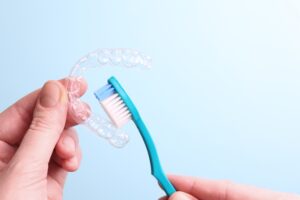
While most people are familiar with the importance of a oral hygiene routine, many have a hard time meeting the requirements of this important daily regimen. If you’re undergoing braces treatment like Invisalign, knowing the best way to clean your teeth and aligning trays is critical to getting the results you want. Why Oral Hygiene…
Whether you’re new to braces or have been through the ropes before, one of the biggest questions our patient have is “what can I eat with braces”? At the Centre for Invisible Braces, we know how challenging eating with braces can be. To help you enjoy your treatment with braces a little more, Dr. Grussmark…
In recent years, clear braces have become one of the most popular dental treatments available. Used to improve both the look, function, and health of the smile without the distraction and discomfort of metal, it’s no small wonder why treatments like Invisalign and ClearCorrect are quickly gaining popularity among teens and adults alike. With all…
Understanding Invisalign: A Comprehensive Overview
Invisalign is a revolutionary orthodontic treatment that utilizes clear aligners to straighten teeth without the need for traditional metal braces. This innovative approach offers a discreet and comfortable alternative for patients seeking to improve their smiles.
The aligners are custom-made using advanced 3D imaging technology, ensuring a precise fit for each individual's dental structure. Patients typically wear each set of aligners for about two weeks before progressing to the next set, allowing for gradual teeth movement and a more convenient treatment experience.
Common Myths About Invisalign Debunked
Despite its growing popularity, many misconceptions surround Invisalign that can deter potential users. For instance, some believe that Invisalign is only suitable for minor dental corrections, when in fact it can effectively treat a range of orthodontic issues, including overbites, underbites, and even complex cases.
Another myth is that Invisalign is significantly more expensive than traditional braces. While the cost can vary depending on the complexity of treatment, many patients find that the benefits of comfort, aesthetics, and convenience justify the investment in their oral health.
Maintaining Oral Hygiene During Orthodontic Treatment
Maintaining proper oral hygiene is crucial during any orthodontic treatment, including Invisalign. Patients are encouraged to brush their teeth after every meal and before reinserting their aligners to prevent plaque buildup and ensure a healthy mouth throughout the treatment process.
Additionally, using antimicrobial mouthwash and flossing daily can help keep the teeth and gums healthy. Regular dental check-ups during the treatment period are also recommended to monitor progress and address any concerns promptly.
What to Expect During Your Invisalign Consultation
Your initial consultation for Invisalign will typically include a comprehensive dental examination, where your orthodontist will assess your specific needs and discuss your treatment goals. This is an essential step in determining whether Invisalign is the right option for you.
During this appointment, your orthodontist will also explain the entire process, including how long your treatment will take and what to expect at each stage. They may take digital impressions or X-rays to create a personalized treatment plan tailored to your unique dental structure.
Understanding Invisalign: A Comprehensive Overview
Invisalign is a revolutionary orthodontic treatment that utilizes clear aligners to straighten teeth without the need for traditional metal braces. This innovative approach offers a discreet and comfortable alternative for patients seeking to improve their smiles.
The aligners are custom-made using advanced 3D imaging technology, ensuring a precise fit for each individual's dental structure. Patients typically wear each set of aligners for about two weeks before progressing to the next set, allowing for gradual teeth movement and a more convenient treatment experience.
Common Myths About Invisalign Debunked
Despite its growing popularity, many misconceptions surround Invisalign that can deter potential users. For instance, some believe that Invisalign is only suitable for minor dental corrections, when in fact it can effectively treat a range of orthodontic issues, including overbites, underbites, and even complex cases.
Another myth is that Invisalign is significantly more expensive than traditional braces. While the cost can vary depending on the complexity of treatment, many patients find that the benefits of comfort, aesthetics, and convenience justify the investment in their oral health.
Maintaining Oral Hygiene During Orthodontic Treatment
Maintaining proper oral hygiene is crucial during any orthodontic treatment, including Invisalign. Patients are encouraged to brush their teeth after every meal and before reinserting their aligners to prevent plaque buildup and ensure a healthy mouth throughout the treatment process.
Additionally, using antimicrobial mouthwash and flossing daily can help keep the teeth and gums healthy. Regular dental check-ups during the treatment period are also recommended to monitor progress and address any concerns promptly.
What to Expect During Your Invisalign Consultation
Your initial consultation for Invisalign will typically include a comprehensive dental examination, where your orthodontist will assess your specific needs and discuss your treatment goals. This is an essential step in determining whether Invisalign is the right option for you.
During this appointment, your orthodontist will also explain the entire process, including how long your treatment will take and what to expect at each stage. They may take digital impressions or X-rays to create a personalized treatment plan tailored to your unique dental structure.